How to choose the right table tennis table

Choosing a table tennis table isn't just about price or looks. Above all, it's about how you'll use it. Will it live indoors or outdoors? Will it come out now and then, or get played on most days? Will it be used by children, adults, the whole family, or in a shared setting?

The right questions to ask at the start are usually simple, and they're the ones that lead you to a table that genuinely fits your everyday life. At Cornilleau, we believe a good table is first and foremost one that suits real life: where you play, how often you play, and what you expect in terms of durability, safety and playing comfort. To go further, you can also explore our full range of Cornilleau table tennis tables.

Find your ideal ping-pong table

Answer 3 questions to discover the table best suited to your needs.

Which table tennis table for which use?

With so many types of table tennis table out there, choosing isn't always straightforward. They do, however, fall into three broad families of use, and that already goes a long way towards narrowing things down:

UseWho / what forSuitable tables
Leisure, home and gardenThe most common use, with family or friends, indoors or out.Outdoor table tennis tables
Schools, councils and public spacesParks, campsites, schools, workplaces and other spaces open to the public. Schools can also browse our dedicated Cornilleau for Schools range.Institutional table tennis tables
Competition and clubsDemanding indoor play, with an approved bounce for the sport.Competition table tennis tables


This guide focuses mainly on choosing a leisure table, as that's what the vast majority of buyers need. If you're working to a tighter budget, also take a look at our second-choice table tennis tables, which offer excellent value for money.

Can a table tennis table stay outside all year round?

It's one of the most important questions, and one of the most useful to ask when choosing. Not every table is built to live outdoors, and the real difference starts with the playing surface.

Indoor vs outdoor: what's the actual difference?

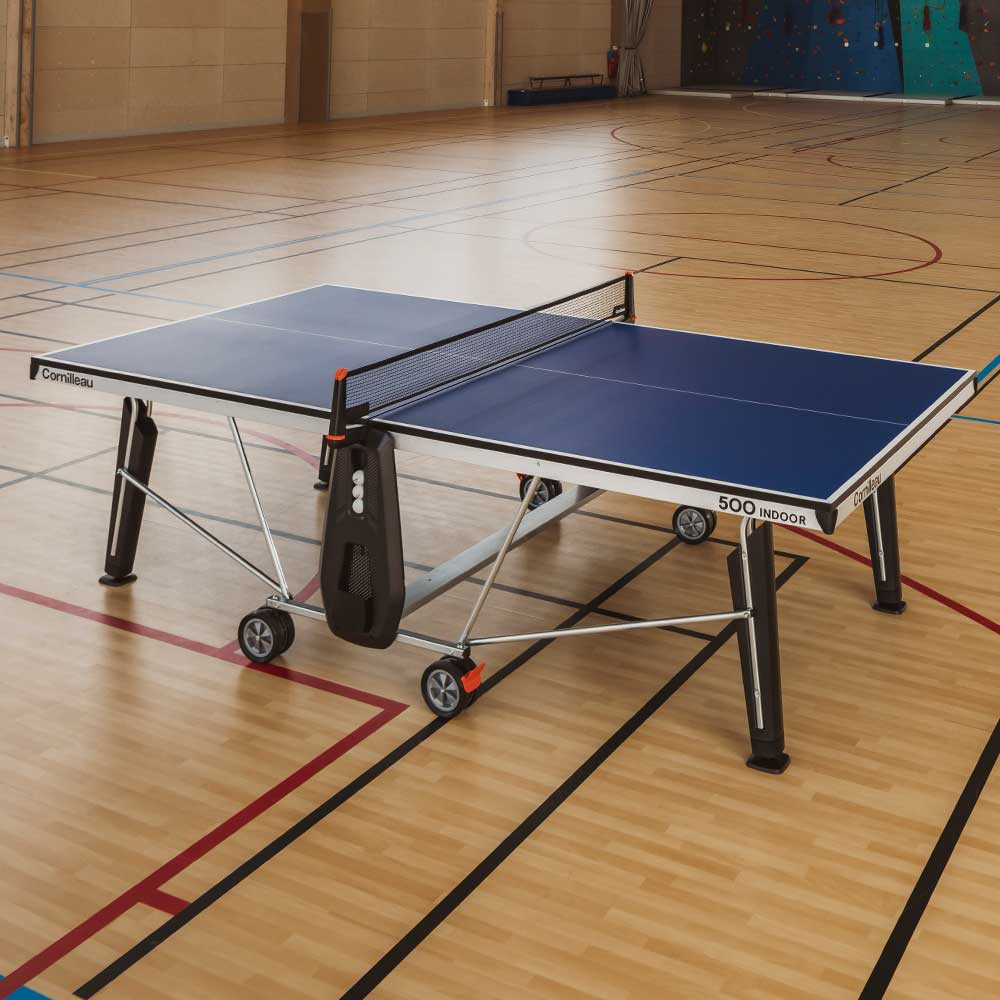
Indoor table tennis tables use a chipboard top. They offer excellent bounce, but must be kept strictly out of the weather: damp, sunlight and high temperatures can make the surface blister or warp, which quickly ruins the quality of play. That includes unheated garages and conservatories, where condensation and big temperature swings soon take their toll. Our outdoor table tennis tables, by

contrast, use a solid HPL laminate top (High Pressure Laminate), designed to stand up to rain, snow, frost and knocks.

Why do so many people choose an outdoor table, even for indoor play?

Because an outdoor table tennis table usually gives you more peace of mind. Even if you mainly play indoors, it copes better with temperature changes, everyday knocks and less-than-ideal conditions. An indoor table is more delicate: a single bat striking the top can leave a mark. That's why many players opt for outdoor models, even when they won't be playing outside all the time, and why almost 90% of players recommend Cornilleau outdoor tables.

💡 Top tip

If your table is going to stay outside, or simply live somewhere you can't fully control, go straight for a proper outdoor table tennis table. Given a typical British winter, it's usually the most sensible choice in the medium to long term.

Which table tennis table for a garden or patio?

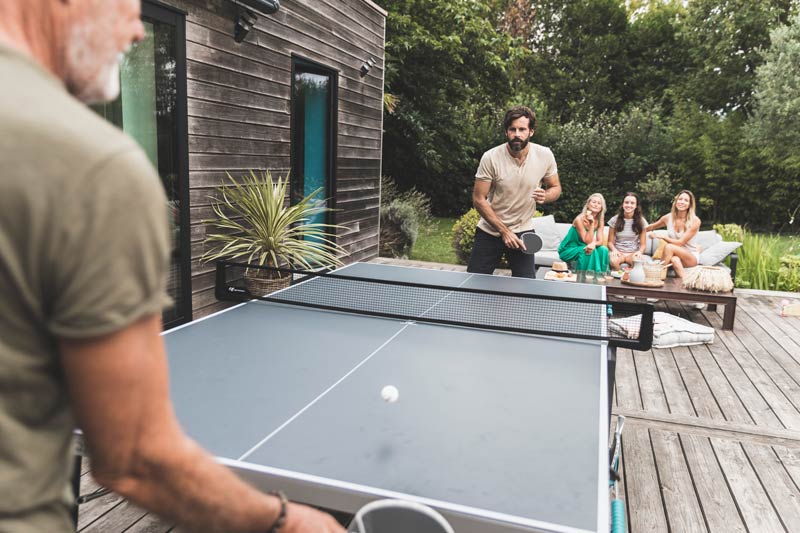
When you play table tennis outdoors, the table needs to be designed for the outdoors, but also for the reality of your garden: sunshine, damp, sometimes uneven ground, moving it around and putting it away after the game.

Does sunlight really affect playing comfort?

Yes. Outdoors, an overly shiny surface can make it harder to read the ball and tire your eyes. That's why an anti-glare finish is a genuine buying criterion. At Cornilleau, we offer two playing-surface finishes depending on the range: Softmat, found on tables in the Sport range, reduces sun glare threefold, while Mattop, used on tables in the Performance range, absorbs the intensity of the sun's rays and cuts glare tenfold.

These figures aren't just marketing claims: panel gloss is measured in our laboratory at different angles, so that its behaviour can be objectively compared with other surfaces on the market. Beyond glare, Cornilleau also works on how well its tops stand up to sunlight over time. UV ageing can gradually fade outdoor surfaces, which is why many HPL panels were tested to select those most resistant to it. If you often play outside, it makes a real difference day to day.

Does the ground matter as much as the table?

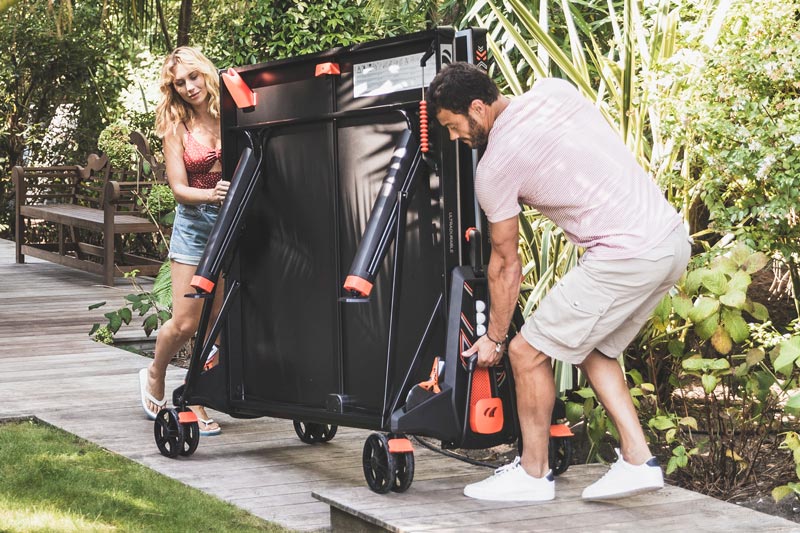
Yes. A patio, a lawn or a gravel path doesn't ask the same of a table as a perfectly smooth indoor floor. This is where stability and manoeuvrability really count: adjustable feet, suitable wheels, good load-bearing capacity and the ability to clear obstacles. On Cornilleau tables, large twin wheels, up to 200 mm depending on the model, make the table easier to move around every day, even across a patio, over a kerb or on uneven ground. To find out more, discover the stability and manoeuvrability of Cornilleau table tennis tables.

💡 Top tip

For a garden or patio, choose a table designed for the outdoors: easy to move, stable on imperfect ground and pleasant to play on, even in bright sunshine.

Which table tennis table for a family with children?

In a family setting, playing quality matters, of course. But safety, ease of handling and the robustness of your table quickly become just as important.

Why is safety a real buying criterion?

Because a table tennis table is a large, folding, mobile piece of equipment. Handled carelessly, it can quickly become a worry, especially with children around. European standard EN 14468 already sets a baseline, but Cornilleau has chosen to go further on most of its tables, with 16 locking points instead of the 8 required by the standard. To find out more, see our page on table tennis table safety.

Why does the folding system make such a difference?

When a table is folded and unfolded often, a simple, safe action changes everything. Cornilleau offers a patented centralised system, DSI, which opens, closes and locks the table, with a top that locks at 65° if the handle is released. It's exactly the kind of detail that gives families real peace of mind.

💡 Top tip

For a family, look beyond the price. A safer table that's easier to handle and sturdier day to day is usually the best choice in the long run.

Do all table tennis tables offer the same bounce?

No. And it's one of the most important criteria, even for leisure play.

What does bounce quality depend on?

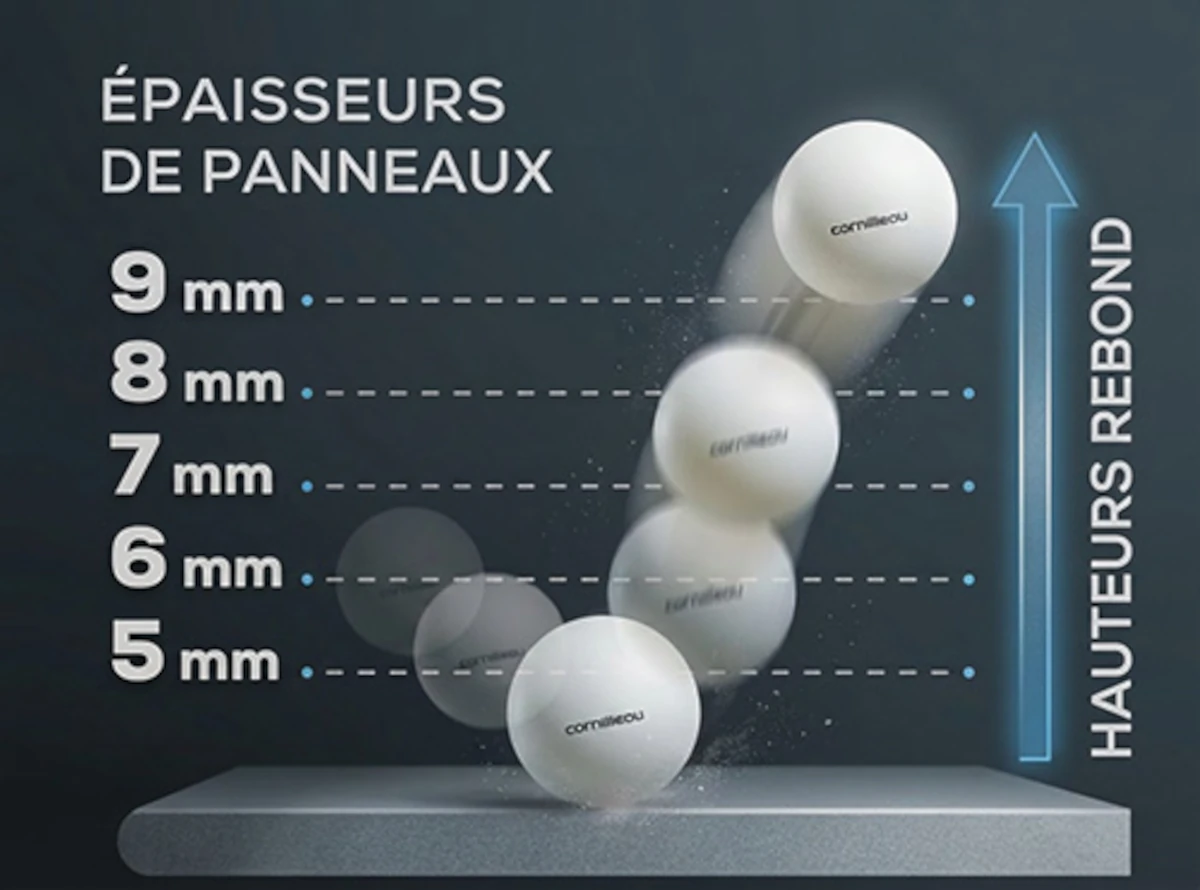
Playing quality depends first and foremost on the material of the top, its thickness and how well it's supported by the frame. The thicker the playing surface, the higher, more consistent and more comfortable the bounce. All Cornilleau tables already offer a quality bounce for leisure play, but the thicker the top, the better the playing experience. To explore the subject further, see our page on the playing quality of table tennis tables.

On outdoor tables, tops range from 4 to 9 mm depending on the model. On indoor tables, they range from 16 to 25 mm, with a leisure bounce on the entry models and a competition bounce on the most advanced ones.

What's generally available on the market?

Not every brand uses the same materials or the same thicknesses. Outdoors, leisure models often have tops of around 4 to 6 mm, with some premium models going thicker. Indoors, thicknesses rise significantly, typically 18 to 25 mm, with the thickest reserved for competition tables. It's a clear sign that a table is about more than its looks: the thickness of the playing surface is already a reliable indicator of its level.

What difference does top thickness actually make to the player?

Thickness makes a very tangible difference in play. With a thicker top, the bounce is more consistent, rallies flow better and the game feels more refined. For occasional players, every Cornilleau table already delivers a quality bounce. But the more you play, the more you feel the difference: the game becomes livelier, easier to read and more enjoyable.

HPL or aluminium outdoor top: how do they play differently on your outdoor table tennis table? 

At first glance, two outdoor tables can look comparable if they have the same top thickness. However, thickness alone isn't enough to judge playing quality. Outdoors, the nature of the material, its design and its manufacturing process all have a direct influence on the table's performance and durability.

HPL (high pressure laminate) and aluminium composite panels are currently the two main technologies used for outdoor table tennis tables. Each has its own characteristics, both in terms of bounce and long-term resilience.

Bounce: above all, a question of design

Contrary to popular belief, two tops of the same thickness don't guarantee the same playing behaviour. Material quality, internal structure and manufacturing process play just as big a role as thickness.

Tests carried out by Cornilleau on different panels show that bounce performance can vary between the models tested. For example, a competitor's aluminium composite panel achieved a performance of 72.2%, while our HPL panels reach 73.7% in 5 mm and up to 77% in 6 mm.

These results, however, apply to the samples tested by Cornilleau and cannot be generalised to every aluminium panel on the market. Depending on the manufacturer and the technology used, differences in bounce may be small, or even non-existent.

Bounce can vary from one manufacturer to another. Impact resistance, on the other hand, makes all the difference over time.

The real difference: impact resistance

An outdoor table tennis table has to cope with bat strikes, everyday knocks, the weather, hailstones and falling objects. Over the years, all of this can permanently damage the playing surface.

Cornilleau's resistance tests highlight a difference in behaviour between the materials. The aluminium composite panels tested dent immediately on impact: a single knock (a hailstone, a stray bat...) can cause a permanent dent that stays visible on the playing surface and can't be removed.

By contrast, in the same tests, no denting was observed on Cornilleau HPL panels. Their high-pressure laminated structure offers excellent resistance to everyday impacts and keeps the surface intact for the long term.

Beyond looks, this resistance is a real asset for a table that's meant to stay outdoors for many years.

Choosing an outdoor table: look beyond thickness

Top thickness is a useful indicator, but on its own it doesn't sum up how an outdoor table tennis table performs.

Depending on the manufacturer, an aluminium composite panel can offer a bounce comparable to an HPL panel. However, a top's ability to withstand impacts and keep its original appearance is an essential criterion for outdoor use.

At Cornilleau, choosing HPL meets exactly this goal: a playing surface that performs, lasts, and keeps its technical and visual qualities year after year, whatever the outdoors throws at it.

Bounce comparison: aluminium composite and Cornilleau HPL (outdoor tops)

Other brandsCornilleau 100XCornilleau 200XCornilleau 500X
Material6 mm aluminium composite4 mm HPL laminate5 mm HPL laminate6 mm HPL laminate
Bounce height216 mm210 mm221 mm231 mm
Performance72.2%70%73.7%77%

Results of comparative tests carried out by Cornilleau on the models tested. Bounce performance may vary depending on the manufacturer, panel design and technology used.

How to read the outdoor range

Across the Cornilleau outdoor range, top thickness works as a simple guide:

  • ​ 4 to 5 mm: a quality bounce for leisure play and casual games.
  • ​ 6 mm: a real step up in consistency and playing comfort.
  • ​ 7 to 9 mm: an even more refined bounce, close to that of an indoor competition table, while keeping all the advantages of a genuine weatherproof outdoor table.

How to read the indoor range

On indoor table tennis tables, the logic is slightly different. The entry models are perfectly suited to leisure play, then you move up towards a more demanding feel:

  • ​ 16 to 18 mm: leisure bounce.
  • ​ 22 mm: a very good level of indoor play and a first taste of competition bounce.
  • ​ 25 mm: the most accomplished indoor playing level in the range, for competition use.

💡 Top tip

If playing quality really matters to you, look closely at the material, the top thickness and the overall build of the table, not just its looks or its price.

Which table tennis table should you choose if you play regularly?

The more you play, the more the differences between tables show. What seems "good enough" for the odd game quickly becomes frustrating with regular use.

What you notice when you play often

When you play regularly, you notice more:

  • ​ the consistency of the bounce,
  • ​ how easily you can read the ball,
  • ​ the stability of the table,
  • ​ visual comfort outdoors,
  • ​ how easy it is to handle,
  • ​ and how well its quality holds up over time.

This is also where top thickness matters more. A thicker top delivers a more consistent bounce, livelier play and a more satisfying feel in the long run. On Cornilleau outdoor tables, every thickness is suitable for leisure play, but the thicker tops offer a more refined playing experience.

💡 Top tip

If you play often, it's better to move up the range than to settle for a bare-minimum option. It's usually the best way to keep enjoying the game for years to come.

Why are some table tennis tables more expensive?

It's a fair question, and a useful one. A more expensive table isn't automatically "better", but its price usually reflects very real differences: the materials, the design, the safety level, the lifespan, the service, and also the way the product is designed and made.

Materials

An outdoor HPL top, a frame with better corrosion protection, sturdier wheels or an anti-glare finish all cost more to produce than a basic alternative. But they also bring more comfort, more resilience and better durability over time.

Design

The price also depends on the structure: stability, folding safety, ease of storage, the quality of the features and the robustness of the parts you use every day. A more accomplished table requires more development, more testing and more demanding technical choices. In return, it usually offers a simpler, safer and more enjoyable experience day to day.

French manufacturing and full control of production

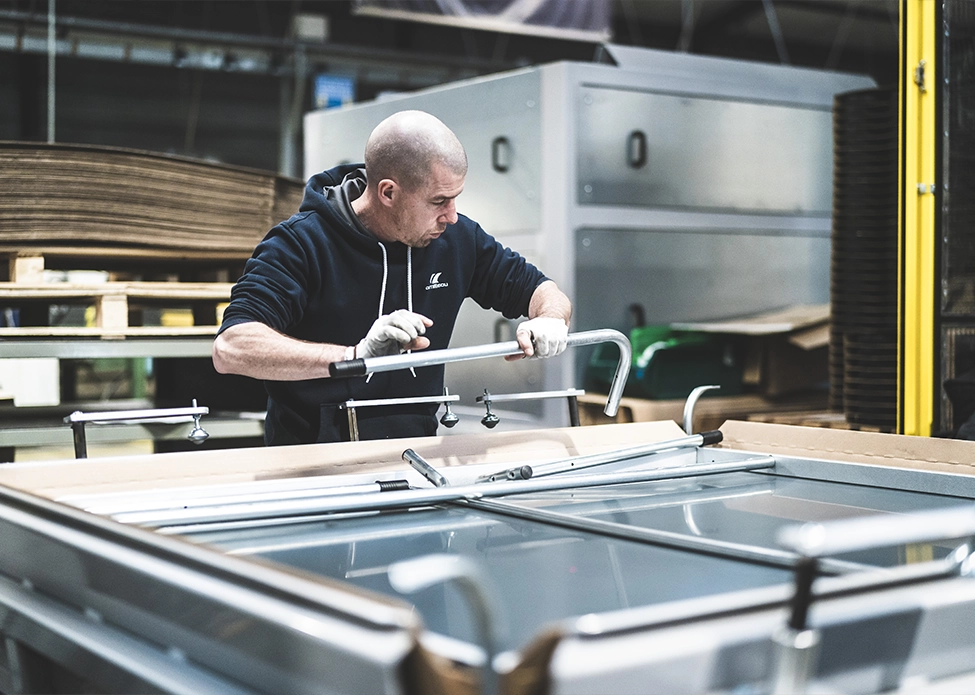
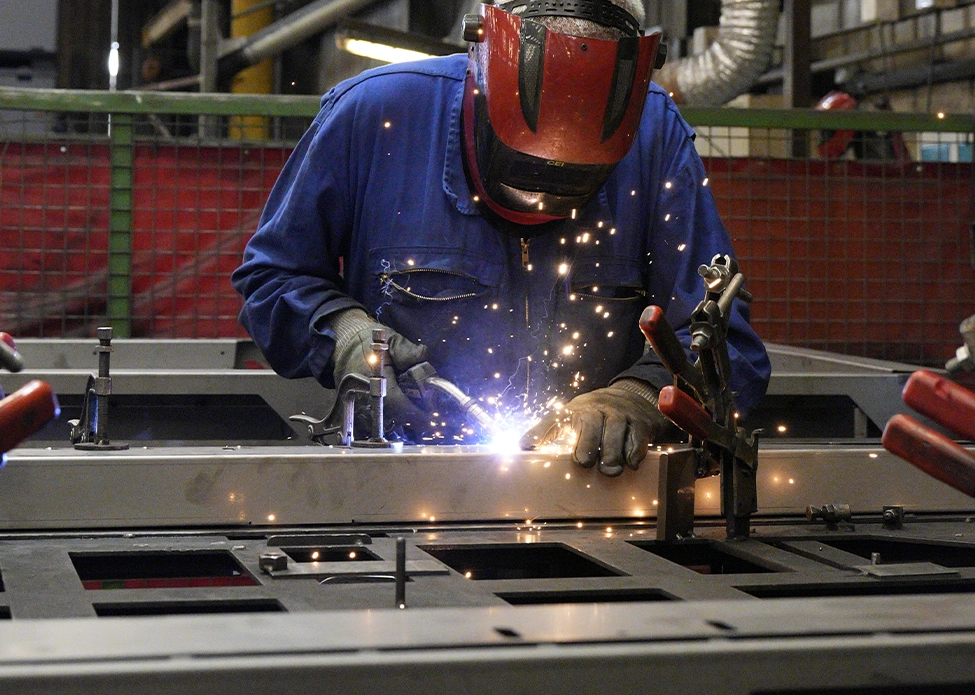
At Cornilleau, the price also reflects a way of designing and making products. Our tables are designed, tested and manufactured in northern France, where our Research & Development department also imagines and prototypes them. This control over every aspect of production, from R&D and quality control through to after-sales service, allows us to be more demanding, more responsive and more consistent over time. It also means better follow-up of the product, its parts and its updates throughout its life.

Lifespan and service

The true price is also judged over time. A table that's cheaper to buy isn't always more economical if it ages quickly, copes badly outdoors or can't be repaired. At Cornilleau, indoor tables come with a 3-year guarantee, outdoor tables with a 10-year guarantee, and spare parts remain available for 20 years, with most parts held in stock in the UK. That changes the way you assess a product.

For example, an outdoor table like the 500X, priced at £849 with a 10-year guarantee, already works out at a theoretical cost of around £85 a year. And given that it remains repairable for 20 years, you can also see it as a long-term investment, bringing the cost down to around £42.50 a year.

💡 Top tip

A higher price can make sense if it means a longer lifespan, better playing comfort and a product you'll still be able to maintain for years to come.

How long does a table tennis table last?

It depends on the type of table, how it's used and how exposed it is.

What really makes a table tennis table last

The durability of a table tennis table depends first on its materials, of course, but not only. It also depends on its ability to withstand UV, damp, scratches, knocks and everyday wear over time. That's why, at Cornilleau, we make a clear distinction between indoor and outdoor tops, and use HPL for tables designed to live outside all year round. But durability doesn't stop at the material: it also comes down to the quality of the structure, corrosion protection, repairability and product support over time.

Can a table really last a long time?

Yes. A well-designed table can serve a family or an organisation for many, many years. At Cornilleau, we design our products to last, to be maintained and to keep doing their job long after purchase. Our indoor tables have a 3-year guarantee, our outdoor tables 10 years, and spare parts remain available for 20 years. That's what allows some tables to stand the test of time, and sometimes even be handed down from one generation to the next.

💡 Top tip

If you're looking for a lasting purchase, look not only at how sturdy the table is on day one, but also at the guarantee, repairability and the long-term availability of spare parts.

What are the dimensions of a table tennis table and how much space do you need?

Table tennis table dimensions are a key consideration before you buy. A full-size table, as defined by the International Table Tennis Federation (ITTF), measures 274 cm long, 152.5 cm wide and 76 cm high (the classic 9 ft by 5 ft table). These dimensions apply both to full-size leisure tables and to competition tables.

To play comfortably, allow a total space of at least 5 metres long by 3 metres wide around the table (roughly 16 ft by 10 ft). If space is tight, Cornilleau also offers mini table tennis tables, designed for smaller indoor spaces and younger players.

MeasurementRecommended size
Table length274 cm (9 ft)
Table width152.5 cm (5 ft)
Table height76 cm (2 ft 6 in)
Recommended playing areaAt least 5 m × 3 m around the table (approx. 16 × 10 ft)

Which criteria really make the difference?

When it comes to choosing, not everything carries the same weight. These are usually the most useful criteria to look at:

CriterionWhat to look forFind out more
Playing qualityBounce, spin response, flatness, visual comfort.Playing quality
DurabilityWeather resistance, long-term performance, guarantee, repairability.Durability
SafetyLocking, folding system, stability, handling.Safety
MobilityWheels, ease of moving, behaviour on different surfaces.Mobility
FeaturesNet adjustment, storage, built-in accessories, ease of use.Features

Which table tennis table is right for you? The quick guide

To help you decide quickly, here's a guide based on your profile. Find the row that sounds most like you and follow the link to the right range.

Your situationOur recommendationExplore
I mostly play outside, and the table stays in the garden or on the patio.Outdoor HPL table, anti-glare, large wheels.Outdoor tables
I only play indoors, under cover, and I want the best possible bounce.Indoor table, thick 22 to 25 mm top.Indoor tables
I want a family table that gets moved often, with children around.Safety-first outdoor table: 16 locking points, DSI folding.Outdoor tables
I play at a club or I'm training for competition.Approved competition table.Competition tables
My budget is tight, but I want Cornilleau quality.Second-choice table, inspected and guaranteed.Second choice
I'm equipping a park, campsite, school or workplace.Institutional table, robust and vandal-resistant.Institutional tables

Once you know what you need, which table tennis table should you

choose? Once you know where you'll play, how often, and what you really expect from your table, not all options are equal any more. For the same need, the brand becomes a deciding factor: playing quality, durability, safety, service, repairability and manufacturing approach. To compare models side by side, browse the full range of Cornilleau table tennis tables, then narrow it down by use with our outdoor tables, indoor tables, competition tables or institutional tables.

And to complete your set-up, don't overlook the bat: find out how to choose your table tennis bat to suit your level and playing style.

FAQ: common questions about choosing a table tennis table

A regulation table tennis table measures 274 cm long, 152.5 cm wide and 76 cm high (9 ft x 5 ft x 2 ft 6 in). These dimensions are set by the International Table Tennis Federation (ITTF) and apply to both competition tables and full-size leisure tables.

The price depends on the type and range. An entry-level full-size indoor table starts at around £375, while a premium outdoor table with a 10-year guarantee costs over £1,000. Cornilleau offers tables at a range of prices to suit every budget. If your budget is tight, our second-choice tables offer excellent value for money.

Yes. An outdoor table can be used perfectly well indoors. Its solid HPL laminate top delivers excellent bounce quality, and its robustness makes it suitable for any environment. That's precisely why many players choose an outdoor table even when they only ever play indoors.

For beginners, a mid-range outdoor table tennis table is often the best choice. It offers an excellent balance of quality and durability, and can be used both indoors and outdoors. There's no need to invest in a competition table for family leisure play: what matters is a stable table with a good bounce that's easy to fold and store.

At the very least, you need two bats and some table tennis balls. The quality of the bat makes a real difference to how much you enjoy the game, even as a beginner. To pick the right one, read our guide on how to choose your table tennis bat.

Cornilleau guarantees its outdoor tables for 10 years and its indoor tables for 3 years, and keeps spare parts available for 20 years. It's one of the longest guarantees on the market, reflecting the quality of the materials and design.

Yes. Cornilleau outdoor tables, with their HPL top and corrosion-treated frame, are designed to withstand rain, snow and frost all year round. A protective cover is still recommended to preserve their appearance and extend the table's life even further.